EN
EN








Products & Materials
For us, sustainability begins long before production. We ask ourselves: How do we make a product that will last a long time? This question forms the basis of our sustainability strategy.
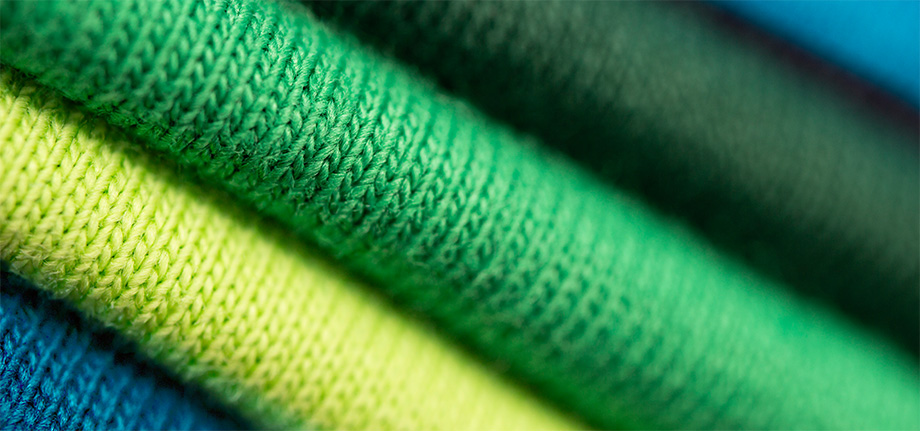
The material has a significant impact on a textile’s environmental footprint. That is why, during the development stage, we select exactly the right material for each specific purpose and use high-quality yarns. Many products are made from long-staple, ring-spun cotton. This ensures a smooth surface. The garments remain robust and retain their shape even after many washes. In our workwear, we use the hard-wearing Vortex Yarn® made from polyester. This ensures the garments last a long time even under heavy use.
The lifespan of a garment plays a key role in its environmental footprint. Wearing a garment for a long time helps to offset the environmental impact of its production. Studies indicate that if people wear a garment for nine months longer, the environmental impact can be reduced by up to 27 per cent, as fewer garments need to be produced during that time.1 Durability is therefore at the heart of our sustainability strategy.
We specifically test new materials for their durability. Organic cotton has been part of our range since 2014, and recycled polyester since 2022. We are currently testing the first biodegradable materials.
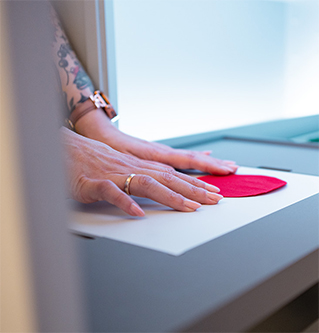
We test our products at various stages of production. We inspect the fabrics even before manufacturing begins. We ensure that the textiles do not shrink, retain their colour and do not form bobbles. In addition, we test every batch in our laboratory in Düsseldorf. Only then do we deliver the goods to our customers.
Regular wash tests help us with product development. We test the shape, colour and surface over a long period of time. To do this, we wash the textiles more than 60 times. By way of comparison: on average, people discard a T-shirt after just 17 washes.2
Further information on quality assurance
We carry out comprehensive life cycle assessments for our key products.This enables us to gain a precise understanding of the environmental impact of our products. These assessments cover the entire life cycle of a textile, taking into account the material, production, use and disposal. The results show that textile care and the duration of use have a significant influence on the environmental footprint.
Use and care have a major impact on a product’s environmental footprint. Frequent washing, tumble drying and ironing can increase the environmental impact. At the same time, the environmental impact is spread over more occasions of wear if a garment is used for longer. This is precisely what we examine using the ‘per-use’ perspective.

All promodoro textiles are certified to the OEKO-TEX® STANDARD 100 and tested for harmful substances. Many items also carry the OEKO-TEX® MADE IN GREEN label. Our products bearing the OEKO-TEX® MADE IN GREEN label have been tested in accordance with the OEKO-TEX® safety criteria for consumer health and are manufactured in certified and audited production facilities. They can be traced using their unique product ID and via the oeko-tex.com Label Check.
More on transparency & commitment
1 ECOS (2021): Durable, repairable and mainstream – How ecodesign can make our textiles circular, basierend auf WRAP-Forschung.
2 Laitala et al. (2019), Quantifying Apparel Consumer Use Behavior in Six Countries, Journal of Textile and Apparel Technology and Management.
The impact of true quality: